
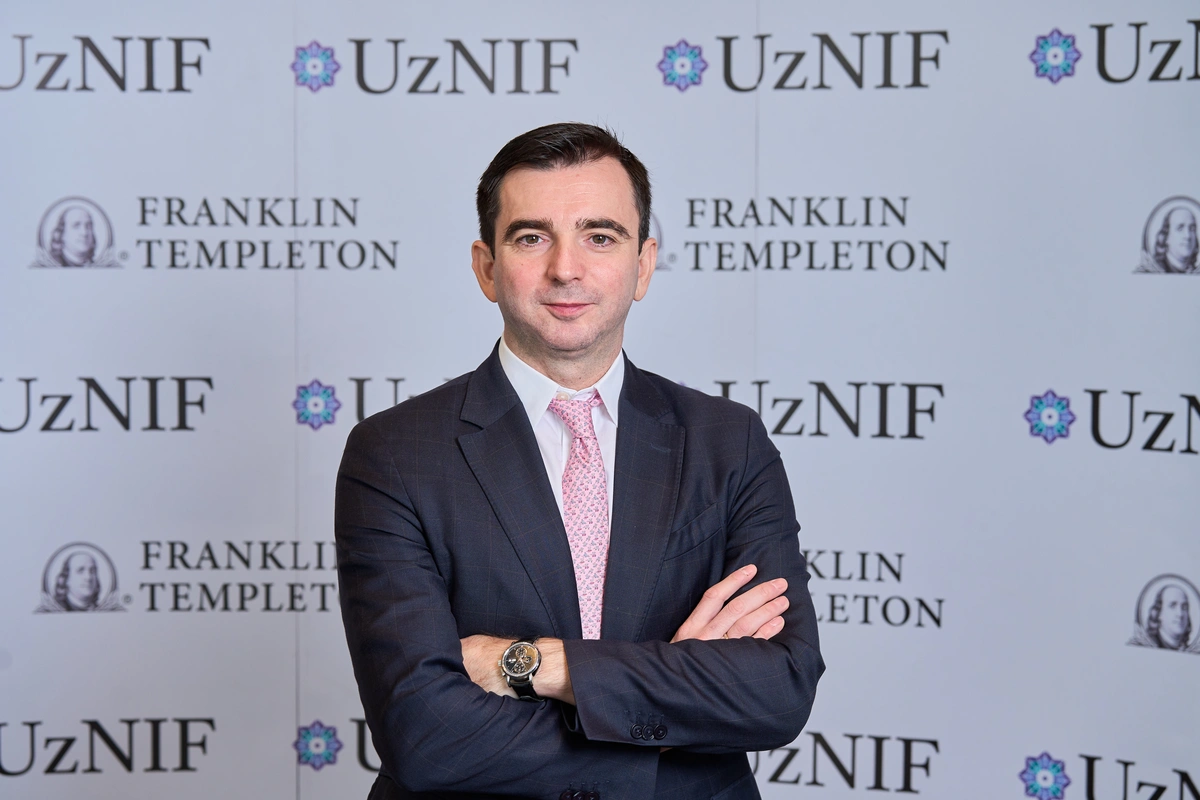
In the summer of 2024, President of Uzbekistan Shavkat Mirziyoyev signed a decree establishing the National Investment Fund of Uzbekistan (UzNIF), with the Ministry of Economy and Finance as its sole shareholder.
To ensure professional asset management, the Ministry engaged the international investment firm Franklin Templeton, which began operating as the fund’s trustee on May 1 last year.
In September, the shares of four state-owned companies and banks were removed from the assets of the National Investment Fund: Microcreditbank, Business Development Bank, Uzbekistan Airports, and Uzpost.
In exchange, UzNIF received additional stakes in three portfolio companies — Uzbekhydroenergo, Temiryulinfratuzilma, and Uzbekinvest. In addition, a 30% stake in Uzpromstroybank (SQB) was transferred to the fund from the Fund for Reconstruction and Development of Uzbekistan.
As a result, the number of the fund’s portfolio companies decreased from 18 to 15, while the initial net asset value increased from $1,68 billion to $1,93 billion.
Spot spoke with Marius Dan, CEO for Central Asia at Templeton Global Investments, about the changes to UzNIF’s portfolio, the transformation of its 15 portfolio companies, the inclusion of Uzpromstroybank, and plans for the fund’s IPO with a dual listing.
More than six months have passed since our first interview. During the last interview, you mentioned the three pillars of Franklin Templeton’s work in Uzbekistan: conducting an IPO, transforming the portfolio companies, and improving their corporate governance. Could you provide an update on the transformation of the fund’s portfolio companies and corporate governance improvements? Could you provide some specific examples of your work?
Thank you for the opportunity. I am very pleased with the work that we have done since 1 May when we launched the National Investment Fund of the Republic of Uzbekistan (UzNIF). In these first six months of managing the fund, we have made good progress. I will structure it based on the objectives of our mandate.
First, on the transformation front, we have started work with all our portfolio companies, conducting diagnostics and preparing transformation plans. We engaged with all 15 companies in the fund. We are at different stages because the initial phase is to conduct an assessment and interact with various levels of management — C-level, C-minus one, C-minus two — as well as supervisory boards to ensure we maintain a deep understanding of the companies and how they operate. This phase is largely completed across the entire portfolio.
The second stage is to prepare a transformation strategy. We have already delivered that for three assets: Uzbektelecom, Uzbekistan Airways, and Navoiyazot. Now we are moving to the implementation phase.
For instance, we are proposing over 120 initiatives for Uzbekistan Airways, which we are confident will boost its revenues, efficiency, profitability, and customer satisfaction. We are currently also working on the other 12 assets.
As you know, the fund’s portfolio has recently changed. For instance, a 30% stake in Uzpromstroybank (SQB) was transferred to the fund. Since this change was announced, we have started engaging with the team at SQB to prepare for the diagnostics phase.
Regarding governance, we have submitted nominations for independent directors to be appointed to the boards of all 15 portfolio companies, including members of our investment team. We have already made appointments to the board of Uzbekinvest, for instance. We are in the process of convening shareholder meetings for all the other companies over the next couple of weeks.
So, on each supervisory board, we will have one member of the Franklin Templeton investment team and between 1 and 3 independent directors, depending on the board’s size and our stake in the company.
And then, in terms of the IPO, which is another key pillar of our mandate, we are progressing well with the fund’s listing on both the Tashkent Stock Exchange and the London Stock Exchange. We expect to complete the IPO in the first half of 2026, in line with the Presidential Decree.
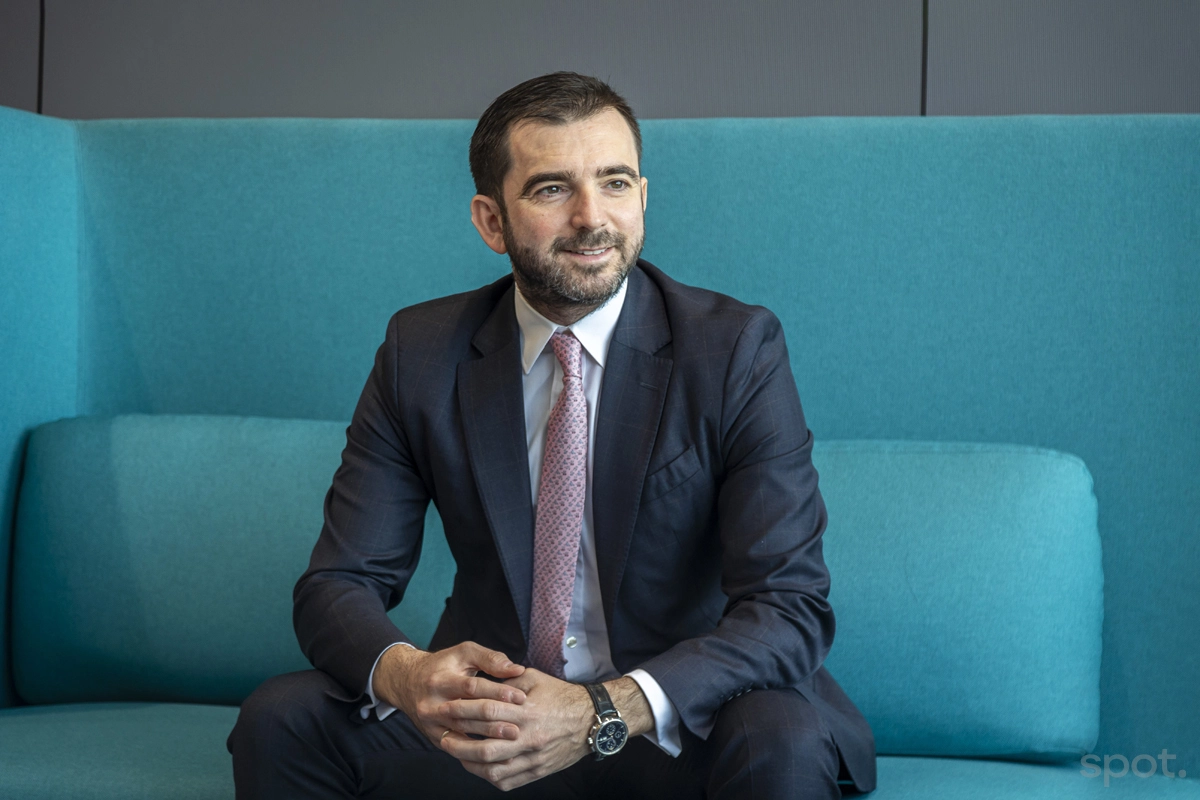
Marius Dan (archive). Photo: Evgeniy Sorochin / Spot
Are your board nominees local or international experts?
It is a great mix of people, nationalities, and skill sets. When approaching board appointments, we considered the current board structures, as some companies already have independent directors. We wanted to add complementary skill sets — whether it’s people with experience in the specific sector, or highly experienced capital markets professionals.
Since a number of our portfolio companies are scheduled to be listed in the next three years, it is important for the supervisory board to have someone with capital markets experience. Other assets are looking to tap into international fixed-income markets, so we wanted to add that capability to support the management in successfully completing a bond issuance.
In terms of nationalities, we have nominated local individuals and people from outside Uzbekistan-from the US, the UK, continental Europe, and the region.
According to the September Presidential decree, UzNIF’s portfolio is set to be restructured. The number of companies will decrease from eighteen to fifteen — four state-owned enterprises are to be removed and one will be added. How was the decision to revise the investment fund’s portfolio made?
This was a conversation between us, as the trustee and manager, and the sole shareholder of the fund, the Ministry of Economy and Finance. The government’s strategy for certain assets has evolved over the last 12 months since the initial decree. This has resulted in these changes.
From my perspective, it is now a more concentrated portfolio. We have bigger stakes in companies like Uzbekhydroenergo, the Railway Infrastructure, and Uzbekinvest. Replacing two smaller banks with SQB creates a much more powerful investment proposition. Overall, these 15 assets make UzNIF an exciting investment opportunity for both local and international investors.
The fund’s value increased from almost $1.7 billion to over $1.9 billion. How does Franklin Templeton, as the trustee and manager of the fund, assess this move?
Obviously, having a more concentrated portfolio and having SQB as one of the largest assets makes the fund an attractive investment opportunity. It gives potential investors access to key sectors of the local economy: energy generation, transportation, banking, financials, and industrials.
The feedback and interest we have received from investors over the last few months has been strong. This is a testament to the portfolio’s current structure.
A bigger fund is more liquid and more visible internationally. When listed on the London Stock Exchange, the National Investment Fund of Uzbekistan is expected to be one of the biggest single-country funds listed there.
Photo: Evgeniy Sorochin / Spot
Could UzNIF’s portfolio be changed again in the future, with state-owned companies removed or added?
No, I think this is going to be the final portfolio. As we progress with the Initial Public Offering in the first half of 2026, we cannot have additional changes through transfers from the government. So this is the final portfolio with which the fund should conduct an IPO.
UzNIF has received additional equity stakes in some of the state-owned companies, bringing the fund’s holdings to 25−40 percent across the portfolio. Will these increased stakes allow UzNIF to implement more effective changes within these companies?
As a result of these changes, the fund’s portfolio has become more concentrated, but it does not necessarily change our approach to the transformation of individual assets. Regardless of whether we hold 20 per cent or 40 per cent, the work is the same because, ultimately, we want to support the development of each company.
We are a partner and a shareholder aligned with the government in transforming these companies to become as profitable as possible. This allows for continued investment in key projects and increased dividends to the state budget, which funds infrastructure, schools, and hospitals. We want the state-owned companies in our portfolio to become profitable pillars of support for the state budget.
The most significant change was the inclusion of SQB, which replaced Mikrokreditbank and Business Development Bank. Was it a government decision, or did Franklin Templeton ask to include a bigger bank in the portfolio?
When we were looking at the changes required, obviously, the banking sector is key for giving investors access to the local economy. Having a big bank representation in UzNIF adds to the underlying investment case. The addition of SQB is very welcome.
In terms of the proposal, the Ministry of Economy and Finance is the key shareholder in the banking sector together with the Fund for Reconstruction and Development of Uzbekistan (FRDU). They recognized that we can support the transformation of a bank like SQB, which may result in a higher valuation if the bank eventually conducts an IPO or is privatized via a sale to a strategic investor. As you know, international financial institutions such as the EBRD, ADB, and IFC signed convertible loan agreements with SQB. We are all working together to help transform SQB into one of the most profitable banks in the country.
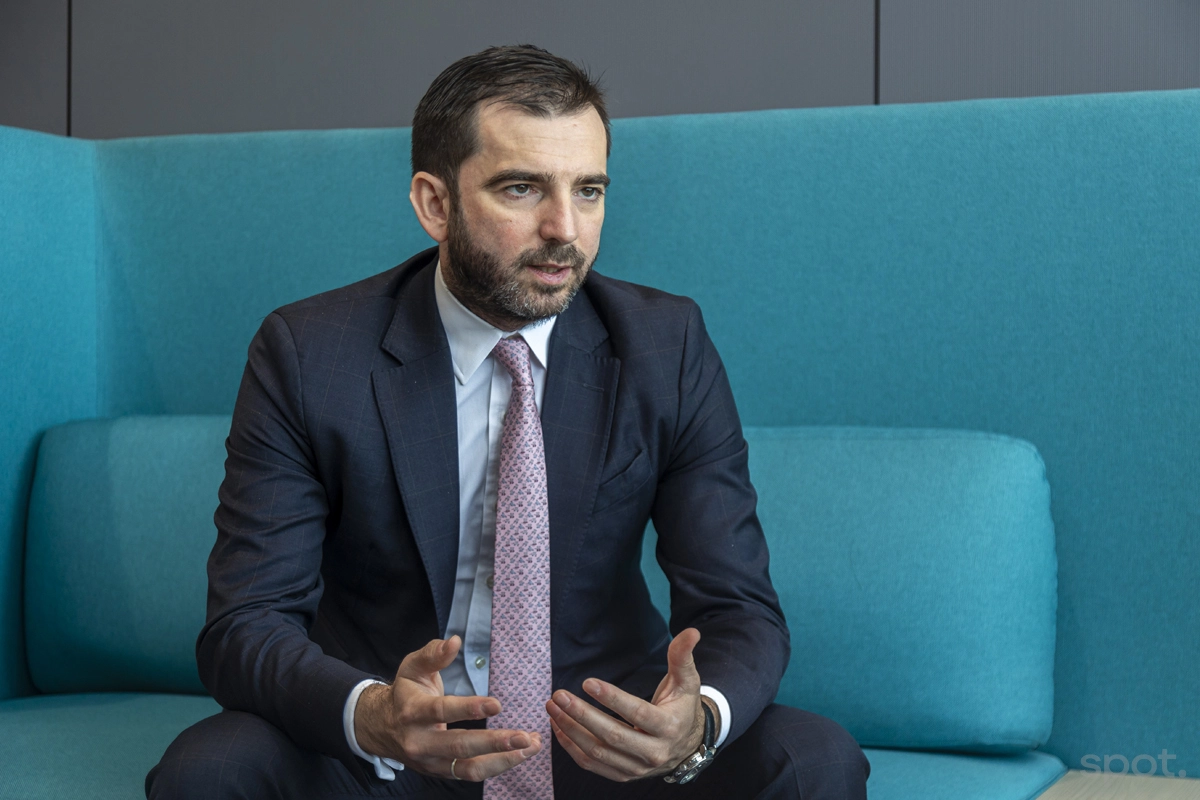
Marius Dan (archive). Photo: Evgeniy Sorochin / Spot
Fitch Ratings noted that the government has revised its strategy for selling state-owned banks and decided to privatize SQB through UzNIF. Do you agree with this revised strategy?
Answer: The fund is a new shareholder in SQB. We think highly of the bank and believe it can continue to grow as one of the largest in the country. Through our work with the management and supervisory board, we want to support the growth of the loan book and the bank’s expansion into further lines of business. SQB is a large corporate bank, but it has done a good job diversifying into SMEs and retail.
All this work should result in a higher valuation. Whether it’s a sale to a strategic investor or an IPO in international markets, this is a decision that will be made at a later stage.
The priority for 2026 is to transform the bank and improve its profitability, operating income, and net interest margin.
Now UzNIF manages stakes ranging from 25 to 40%. Is this level sufficient for effective involvement in changing state-owned companies? Will the fund be able to vote on decisions?
Answer: We certainly believe that as a significant minority shareholder in all 15 portfolio companies, we are effective. We are very aligned with the government’s goal of transforming these high-quality companies. Through governance and management support, we want to position them for capturing future growth opportunities in Uzbekistan.
Through our significant minority shareholding, we are able to effect change, but only with the support of the majority shareholder-the Ministry of Economy and Finance. I must commend the Ministry and UzAssets for being very collaborative. We are all working together to benefit the end consumer in Uzbekistan.
You meet with many people abroad. Is there interest from investors in Uzbekistan in general, and UzNIF specifically?
We held over 130 investor meetings in the last three months. I am very pleased with the level of engagement. Interest has been high because the macroeconomic story of Uzbekistan is attractive. The reforms are reflected in the numbers, such as the GDP growth forecasts for 2025 and 2026. Uzbekistan has seen successful debt issuances by state-owned companies and the government. UzNIF will be the first international equity transaction.
The engagement we saw during our investor day in Tashkent in October is only expected to increase. UzNIF will help make Uzbekistan one of the most dynamic capital markets in the region. I hope UzNIF paves the way for many more successful transactions, capitalizing on the momentum underpinned by the government reforms.
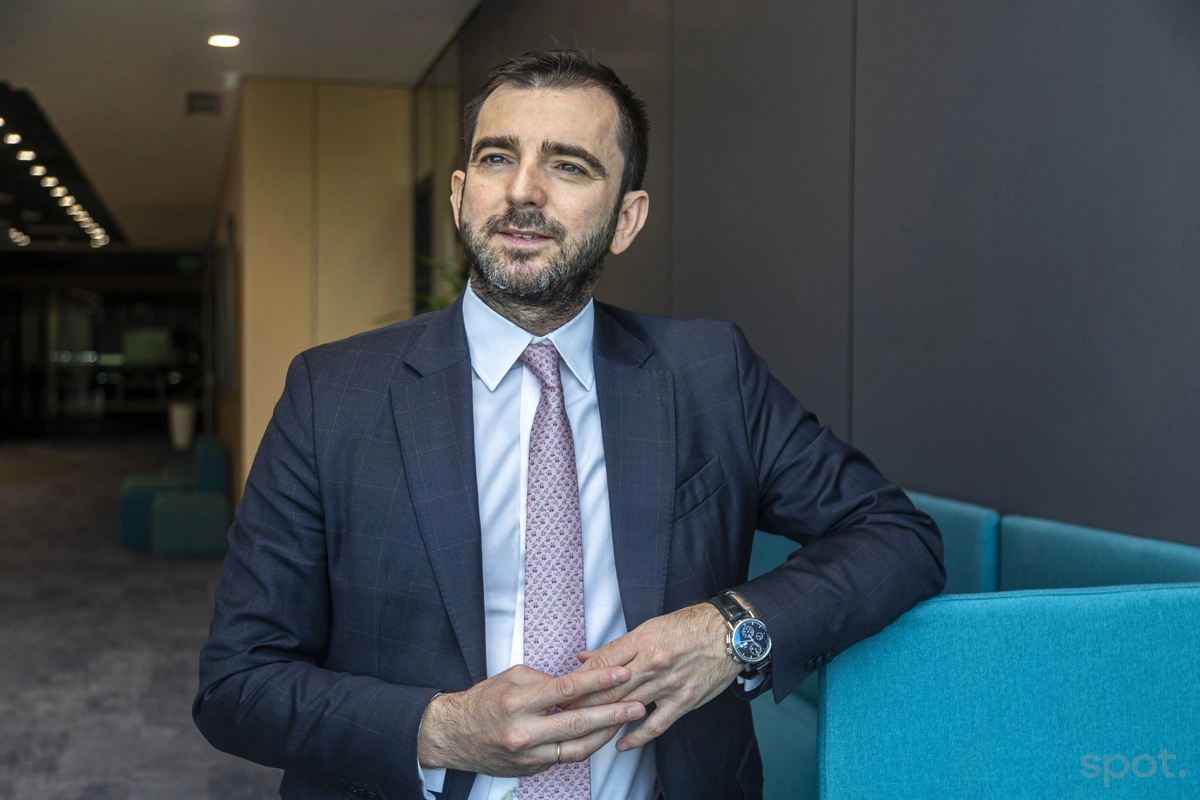
Marius Dan (archive). Photo: Evgeniy Sorochin / Spot
How did investors react to the changes in the fund’s portfolio? Did their interest increase?
The changes to the portfolio, specifically the addition of SQB, provide better exposure to the banking sector and have been positively received by investors.
How do you assess UzNIF’s work in 2025 overall?
We only started on 1 May 2025. We made the fund operational and opened our office here in Tashkent. In the first six months, we made great progress. But I am very excited about 2026 because it will be our benchmark year. It will be the first full year of being a shareholder, with appointed board members, and the year we expect to celebrate the listing on the Tashkent and London Stock Exchanges.
I must emphasize how supportive the Ministry of Economy and Finance, the Presidential Administration, and the National Agency of Perspective Projects (NAPP) have been. This would not have been possible without their support.
Let’s speak about the IPO. What has Franklin Templeton done so far? Have advisors been selected, and has an underwriter been chosen for the local stock exchange?
Work on the IPO started from day one. We have appointed all necessary advisors and underwriters. In accordance with the Presidential Decree we are aiming for the first half of 2026.
How is the reform of the local stock exchange going? In the last interview, you mentioned Franklin Templeton would participate in this.
We are confident that the Tashkent Stock Exchange will be fully prepared to facilitate a dual listing. We are working in close cooperation with the National Agency for Perspective Projects (NAPP), the Ministry of Economy and Finance, the Presidential Administration, UzAssets, and legal counsel on legislative and regulatory amendments required not only for our IPO, but also for any issuer in Uzbekistan.
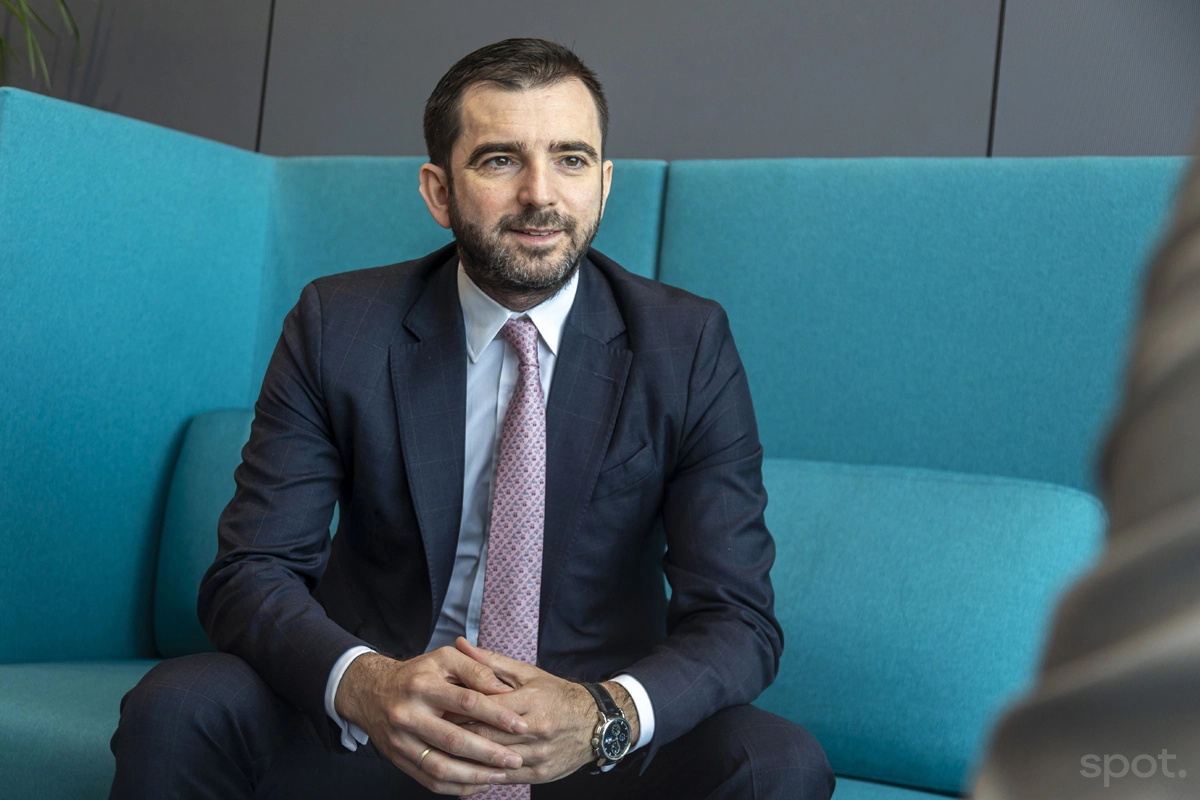
Marius Dan (archive). Photo: Evgeniy Sorochin / Spot
In autumn, the President met with the Franklin Templeton leadership, and it was announced that you would help Uzbekistan attract major international custodians to the local capital market. When should that be expected?
That work is being done right now. Having global custodians and sub-custodians active in Uzbekistan is a prerequisite, and they are excited about the potential business here.
We have already appointed one of the big global banks, which also acts as a custodian, to issue Global Depository Receipts (GDRs) for our planned London listing.
What are your plans for 2026 in general?
We have big plans focused on our mandate: finalizing transformation plans for all portfolio companies, accelerating their implementation, completing the UzNIF IPO, and finalizing governance appointments. I am excited to see the continued government reforms, which will bode well for the country’s economic growth and our companies' performance.
Can you describe 2026 in one word?
Exciting. Since it will be our first full year managing the fund, “exciting” is the word.