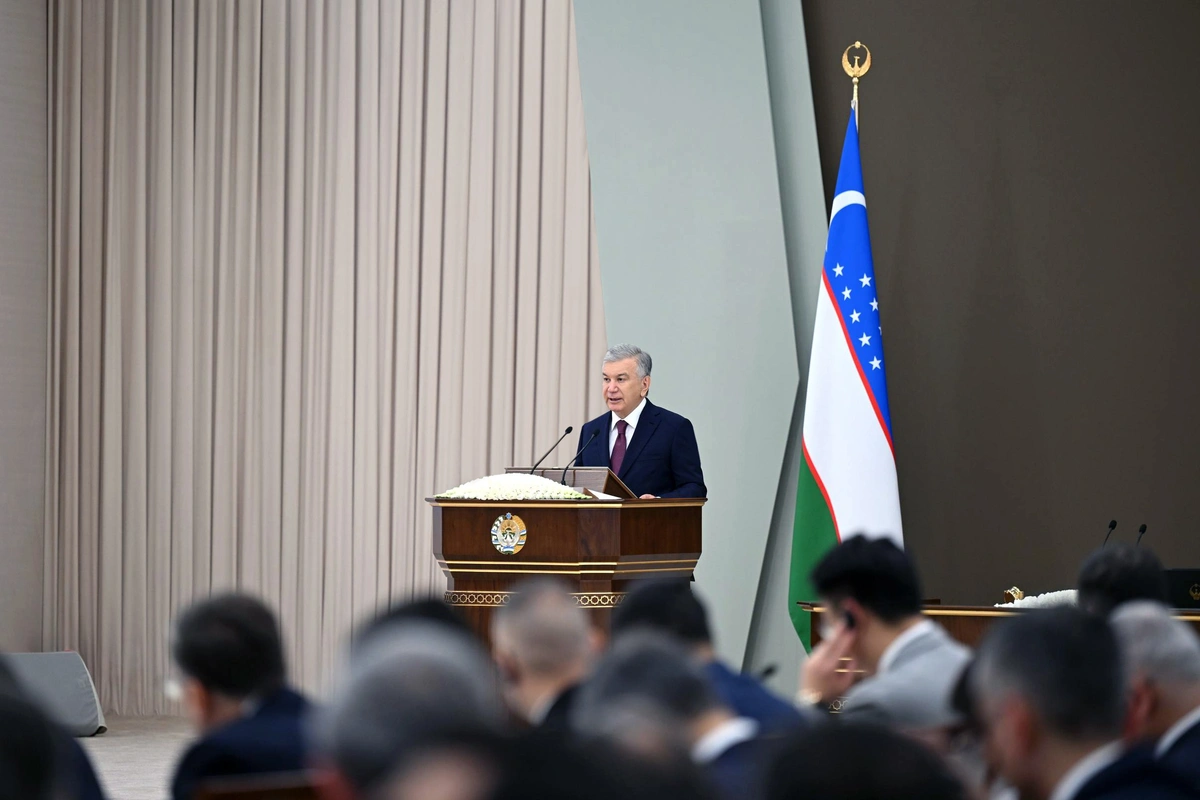
Shavkat Mirziyoyev held a meeting with investors and entrepreneurs in the electrical engineering sector, presidential press secretary Sherzod Asadov announced.
The meeting highlighted significant changes in the sector over the past decade. Investments totalling $2 billion have enabled the launch of 413 new enterprises, which have started producing more than 100 new types of goods, including household appliances, solar panels, electronic meters, high-voltage transformers and other products.
Electrical equipment production has reached 50 trillion soums since the beginning of this year, nearly 30 times higher than in 2016. Exports have increased 14-fold to $1.6 billion.
At the same time, the sector’s potential remains underutilised, the president noted. The task is to accelerate the development of electrical engineering by making better use of the country’s raw material, industrial and economic resources.
The launch of the third copper concentrator at the Almalyk Mining and Metallurgical Complex (AMMC) has increased annual copper production capacity to 300,000 tonnes, Mirziyoyev said. Copper output is expected to rise further to 500,000 tonnes by 2030.
By 2036, Uzbekistan plans to build solar and wind power plants, battery storage facilities and other energy infrastructure worth $450 billion. These projects will create a long-term market for locally manufactured electrical equipment, the president said.
Mirziyoyev noted that Uzbekistan has the mineral resources, experienced manufacturers, promising young specialists and partners needed to develop the electrical engineering sector. However, companies must not simply expand production of existing goods but also make a “major technological leap”, he stressed.
For example, the country plans to establish electricity storage capacity of 4.5 GW by 2030. Foreign partners are ready to use locally manufactured products in battery storage projects, but some types of equipment required for these systems are not yet produced in Uzbekistan.
Demand for video surveillance systems is also growing. Annual demand in the domestic market is estimated at $200 million, while demand including neighbouring countries exceeds $600 million.
Currently, two companies — Bukhara-based Digital Security and Samarkand-based Samvision — produce a combined 2,000 cameras annually using their own software. The president instructed officials to increase the number of such projects.
The English version of this material was generated with the assistance of AI translation tools and may differ slightly from the original text.