
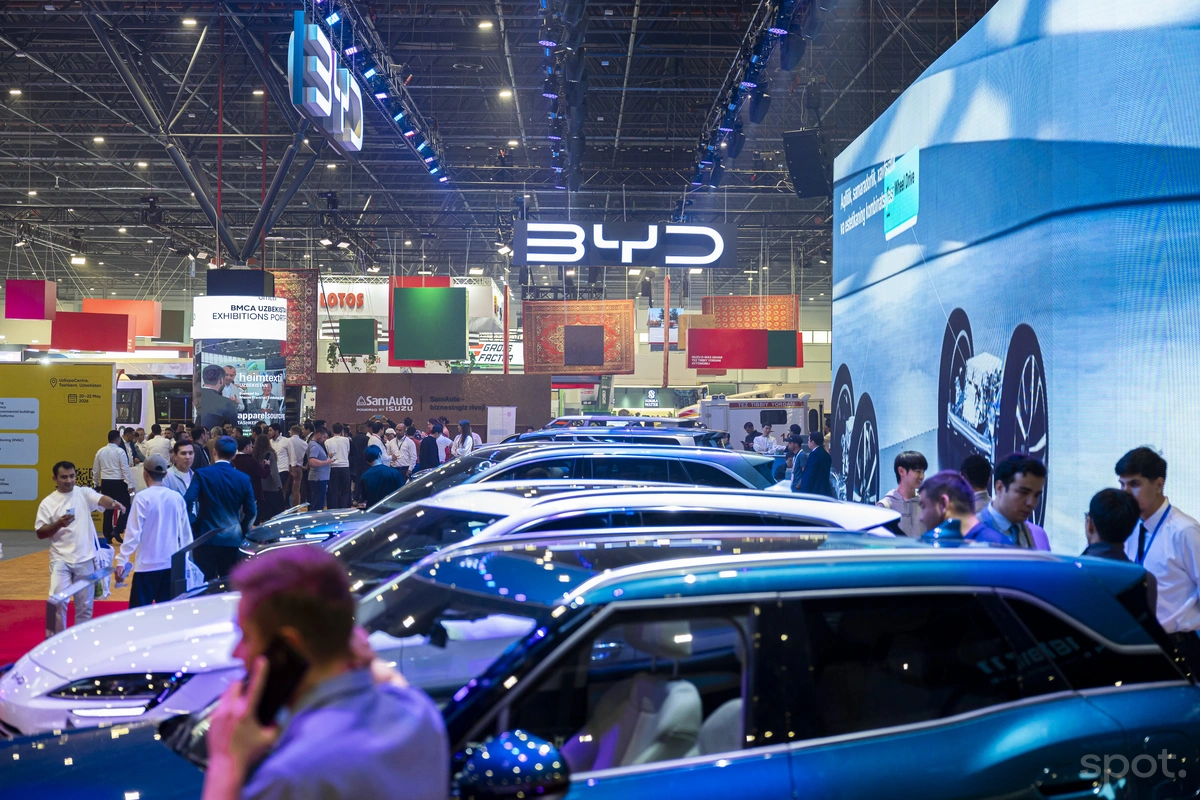
The BYD plant in Uzbekistan plans to produce approximately 10 new models by 2030. Azizbek Mukhitdinov, CEO of the BYD Uzbekistan Factory joint venture, spoke about this in an interview with the O’zbekiston 24 television channel.
This year, production is planned for 40,000 vehicles-doubling the 2025 target. After receiving three-star certification for its BYD plant, the factory began production of the Yuan Up electric crossover, with full production expected by the end of the year.
In 2024, 368 Yuan Up electric vehicles were sold in Uzbekistan, and 6,800 in 2025. The target for this year is to produce 25,000 units.

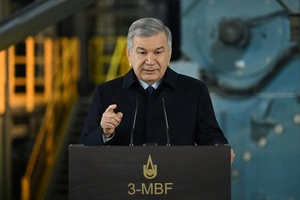
Azizbek Mukhitdinov. Photo: screenshot
The head of the BYD plant noted that the transition to a full production cycle for a single model in just one year is considered very fast. He added that the Chinese side is providing significant technological support and assisting with standardization.
By 2030, production of electric and hybrid vehicles is planned to increase to 200,000 units. To achieve this, an additional $200 million will be invested and approximately 10 new models will be launched.
Human resources remain a key challenge in expanding capacity. By 2030, approximately 10,000 new jobs are planned to be created in the Jizzakh region.
By the end of 2025, the BYD plant in the Jizzakh region increased production fivefold, to 20.2 thousand electric vehicles.
BYD Uzbekistan Factory
In September 2023, BYD and Uzavtosanoat agreed to establish a joint venture, BYD Uzbekistan Factory, and an investment agreement was signed with MIPT. Initially, the plant’s capacity in the Jizzakh region will be 50,000 vehicles per year, but will subsequently be gradually increased to 300,000 vehicles, some of which will be exported to third countries.
The BYD Uzbekistan Factory joint venture began operations in January 2024. The launch ceremony for the first phase of the project was timed to coincide with the president’s visit to China.
In June 2024, the BYD plant in the Jizzakh region began producing electric vehicles.
The plant has the capacity to produce up to 50,000 vehicles annually. The second phase of the project plans to invest $300 million and increase production to 200,000 vehicles, while the third phase, costing $500 million, aims to increase production to 500,000 electric vehicles.
The English version of this material was generated with the assistance of AI translation tools and may differ slightly from the original text.