
Uzbekistan and Russia signed a supplementary agreement to the contract for the construction of an integrated nuclear power plant in the republic, the press service of the Atomic Energy Agency under the Cabinet of Ministers (Uzatom) reported. The project envisages the simultaneous deployment of small and large nuclear power plants.
The document approves the updated configuration of the nuclear power plant:
- two power units with VVER-1000 reactors of generation 3+,
- two power units with RITM-200N reactors (55 MW each).
Once fully operational, the plant will generate approximately 15.4 billion kWh per year-more than 15% of Uzbekistan’s total electricity consumption.
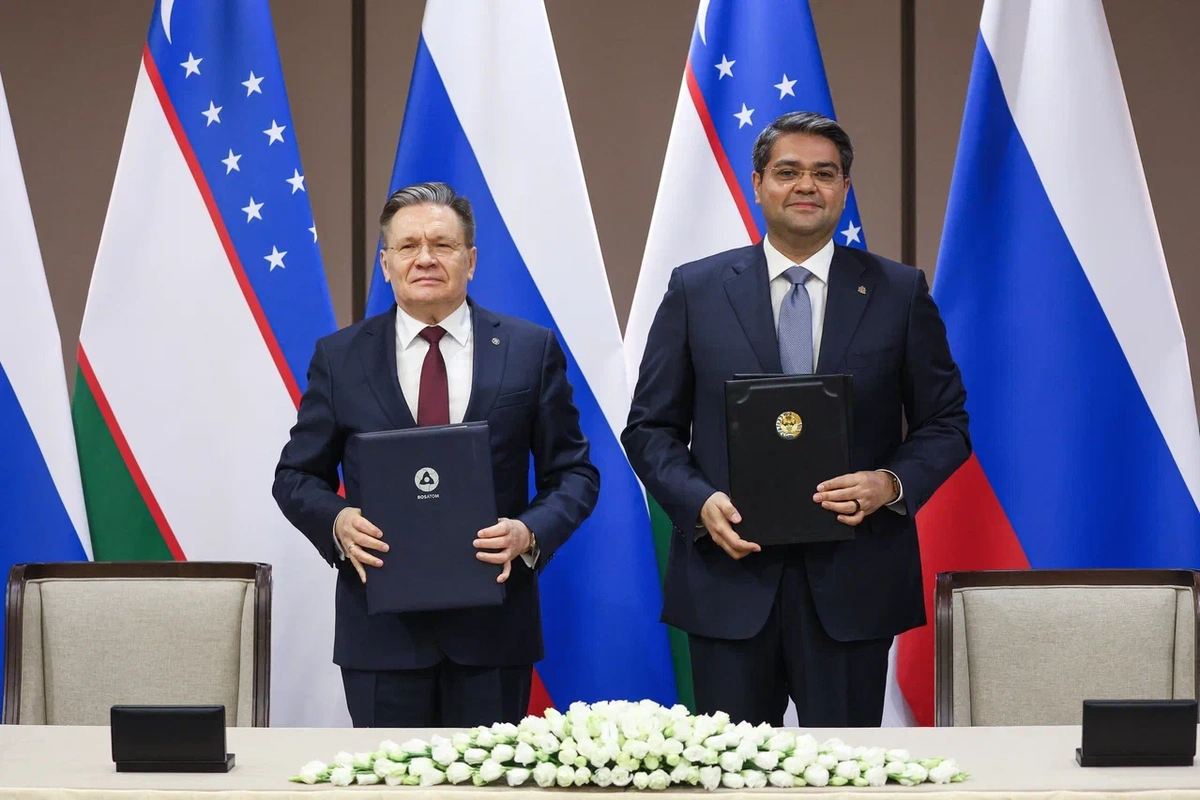
Azim Akhmedkhadzhaev, Director of the Uzatom Agency, and Alexey Likhachev, Director General of the Rosatom State Corporation, also signed a roadmap for cooperation in the nuclear and related fields.
“The roadmap covers key areas of cooperation: the stages of the NPP construction project, the training of highly qualified personnel, public acceptance of nuclear energy, the creation of infrastructure for the future nuclear city, and the comprehensive development of the industry. The signing of the roadmap confirms the comprehensive nature of cooperation between Uzbekistan and Russia in the field of nuclear energy. This partnership contributes to the development of various sectors of the country’s economy and social life,” the statement reads.
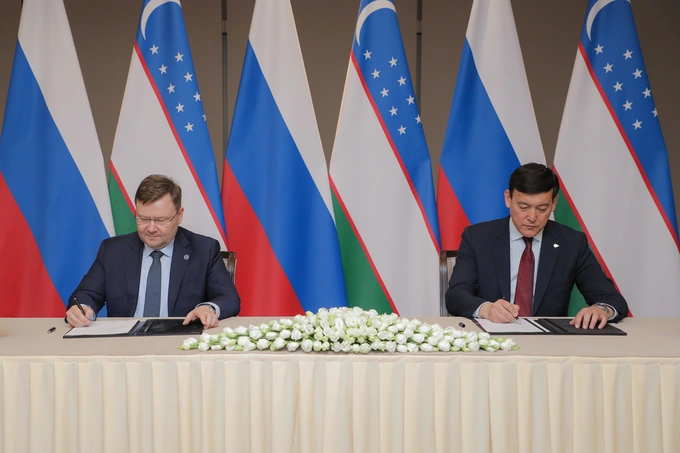
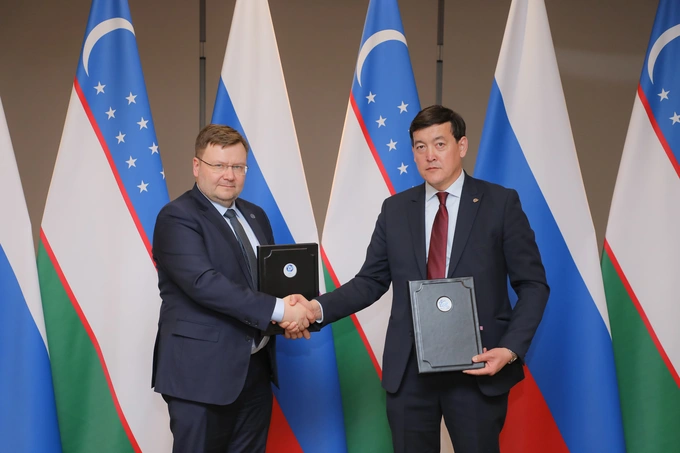
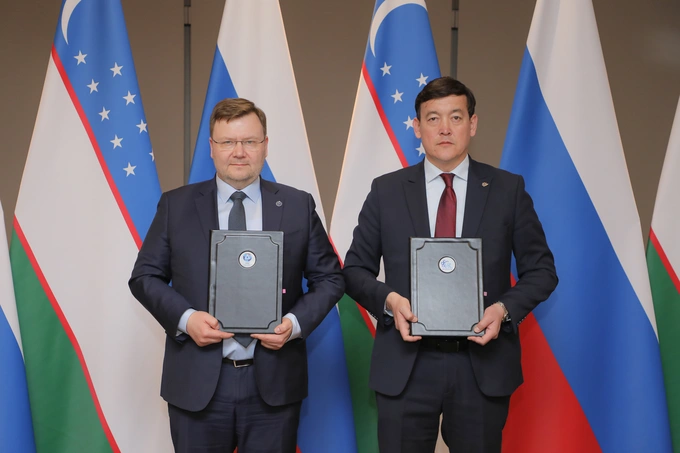

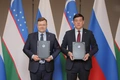
Pavel Bezrukov and Abdijamil Kalmuratov (right). Photo: Uzatom
In addition, the Directorate for Nuclear Power Plant Construction received permission from the Committee for Industrial, Radiation, and Nuclear Safety under the Cabinet of Ministers to use the site for the placement of two nuclear power plant units with RITM-200N reactor units.
Uzatom noted that the examination confirmed the absence of any prohibitive factors for the placement of two nuclear power plant units with reactor installations , such as active tectonic faults, high seismicity zones, or areas of intense karst formation.
“The positive conclusion demonstrates the selected site’s full compliance with nuclear and radiation safety requirements, environmental regulations, and technical standards. This document is key to the site’s use and one of the most significant milestones in the life cycle of any nuclear power plant. It allows for the continuation of detailed design, engineering preparation, and subsequent construction phases, ensuring maximum project safety at all stages,” the agency added.
The English version of this material was generated with the assistance of AI translation tools and may differ slightly from the original text.