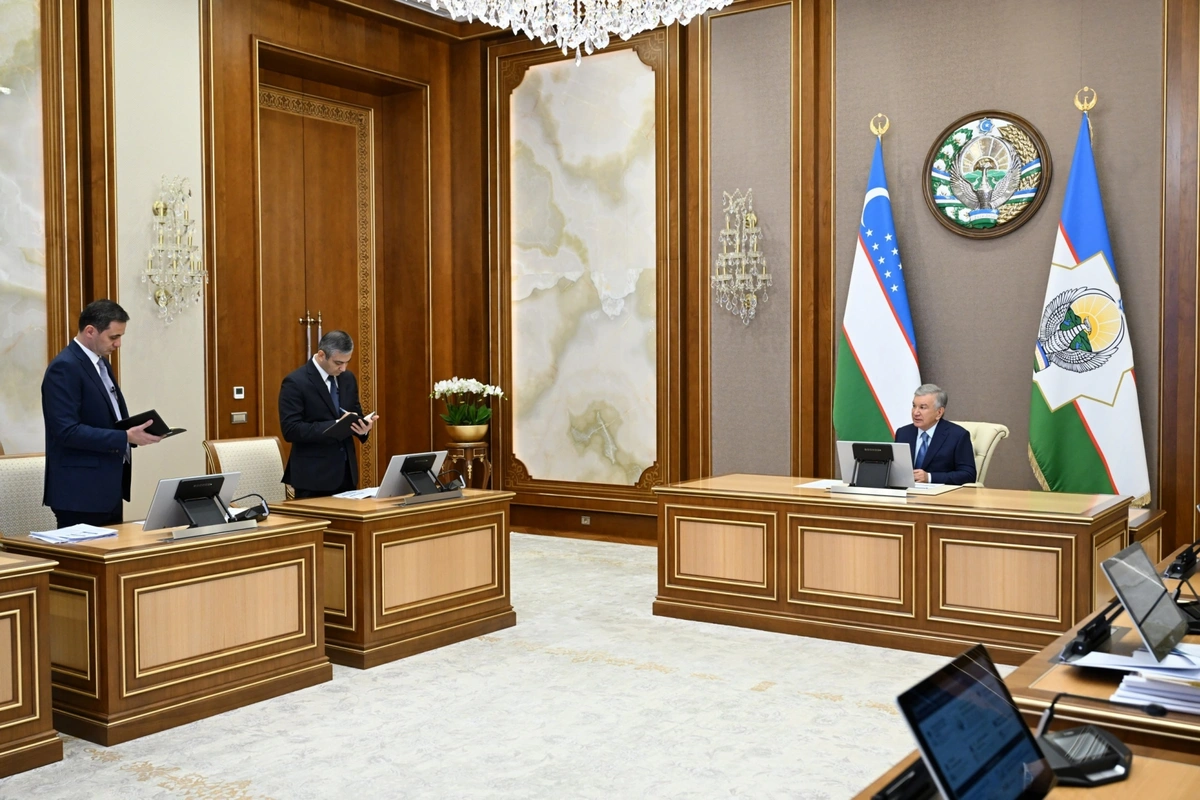
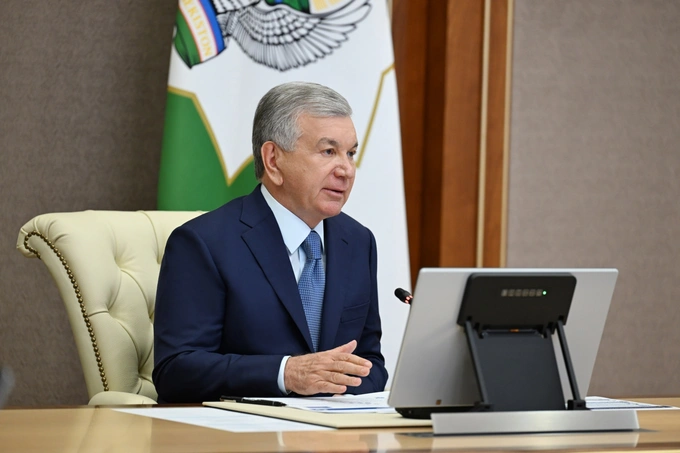
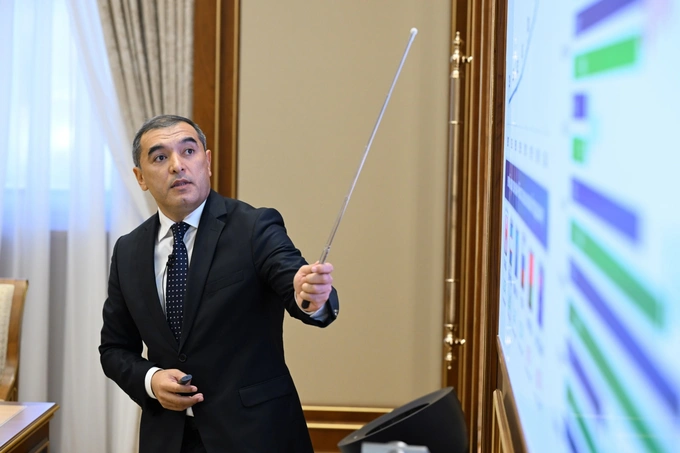
On September 2, Shavkat Mirziyoyev reviewed a presentation on the results of the population and agricultural censuses, as well as proposals to accelerate reforms in the national statistical system, the president’s press service reported.
The presentation focused particularly on ensuring full statistical accounting of economic activity. Currently, the share of the unobserved economy in Uzbekistan stands at 23%, or 246 trillion soums. In agriculture, it accounts for 60% of total turnover.
The incomes of 6.5 million people out of 15.2 million employed, or 42%, are not fully reflected in official statistics. In addition, many registered small and medium-sized businesses are either not actually operating or have ceased their activities.
“One out of every 4−5 soums of economic turnover remains outside the official statistics,” the statement said.
This situation creates unequal conditions for businesses that operate legally and fully meet their tax obligations. According to the authorities, bringing this activity into the formal economy could generate additional budget revenues of tens of trillions of soums and eventually help reduce the tax burden.


In this regard, a proposal was approved to conduct a business census from October 15 to November 30, 2026. As part of the census, all economic entities operating in the country will be inventoried, and their status, composition and distribution across economic sectors will be clarified.
Statistical registers of enterprises and organizations will also be updated, creating a basis for conducting sample surveys.
Population and agricultural censuses
According to preliminary results of the population census conducted this year, Uzbekistan’s permanent population amounted to 39.047 million people. The places of residence and social status of 810,600 people who had not been included in the existing records were clarified.
“A comparison with the existing data showed that the population of Jizzakh region was 2.7% lower, Namangan region 1.3% lower, Surkhandarya region 0.9% lower, and Kashkadarya region 0.7% lower. In Bukhara region, the figure remained virtually unchanged, while in other regions it was higher. In particular, the population of Tashkent district was 1.6 times higher than previously recorded, while in Andijan city it was 15.8% lower”, the statement said.
The agricultural census clarified the boundaries and categories of 985,500 hectares of land that had not previously been reflected in official records. Of this, 789,500 hectares are cropland, 14,100 hectares are greenhouses, 75,300 hectares are orchards, 21,400 hectares are vineyards, and 85,000 hectares are fish farming ponds.
Based on the census results, continuously updated statistical registers of the population and agriculture will be created. In addition, 100 indicators related to socio-economic development programs and 50 indicators in agriculture and cultivated areas will be updated. National accounts indicators for 2017−2025 will also be recalculated.
Thanks to digitalization, the cost of conducting the census did not exceed 1,500 soums per person, which is 15 times lower than the average for CIS countries. The share of people participating in the census online reached 82.3%. All processes were completed within 15 days, making Uzbekistan the second-fastest country in the world in conducting a census.
The English version of this material was generated with the assistance of AI translation tools and may differ slightly from the original text.