Uzbekistan plans to increase the capacity of the Olot border checkpoint on the border with Turkmenistan, the Ministry of Transport’s press service reports.
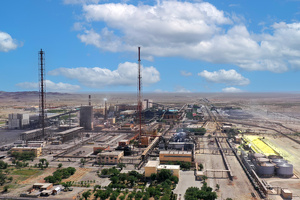
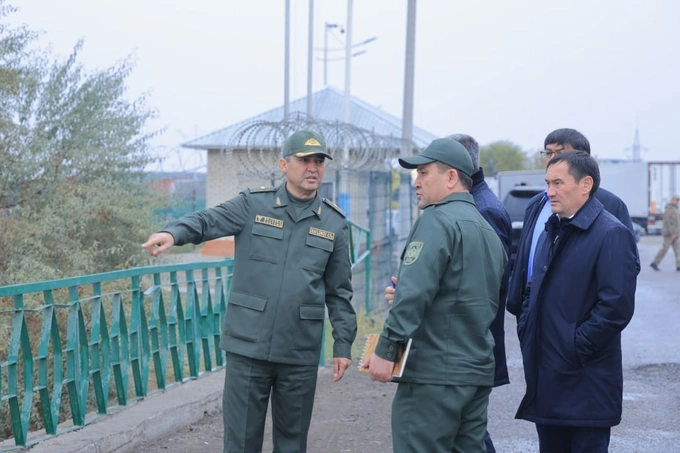
On 4 November, Transport Minister Ilkhom Makhkamov, Customs Committee Chairman Akmalxoja Mavlonov, Uzavtoyul Chairman Jamshid Tursunov and Uzsuvtaminot head Ahmad Suvankulov visited the checkpoint. The officials reviewed its operations and explored ways to speed up the passage of vehicles.
More than 243,000 vehicles passed through Olot between January and October, 2.3 times more than in 2022. Up to 1,200 vehicles cross the checkpoint in both directions every day.
The Ministry of Transport said the checkpoint’s infrastructure needed to be modernised in line with current requirements. The authorities plan to review existing organisational procedures and improve traffic flow management.
The officials also discussed simplifying freight transport, developing logistics infrastructure and ensuring the uninterrupted movement of vehicles across the border. Several proposals were put forward to increase the checkpoint’s capacity.
In particular, the proposal is to abandon the trailer-swapping mechanism introduced by the Turkmen side during the COVID-19 pandemic and return to the traditional transport system.
Under the current arrangement, cargo trailers are detached from tractors registered in one country and attached to trucks from the other country. Abolishing this mechanism would reduce unnecessary inspection procedures and speed up vehicle movement, the ministry said.
Officials also examined a proposal to build a new bridge across the Yomonjar Canal, which connects the neutral zones along the two countries' border. The bridge would replace the existing outdated structure, built in 1978.
The new bridge would have at least two lanes for trucks in each direction. Its construction is expected to speed up freight transport, reduce congestion in the border area and make it easier for passenger cars and pedestrians to cross.
Relevant government agencies will study the proposals and prepare feasibility studies. The initiatives will then be submitted for consideration at the highest level.
The English version of this material was generated with the assistance of AI translation tools and may differ slightly from the original text.