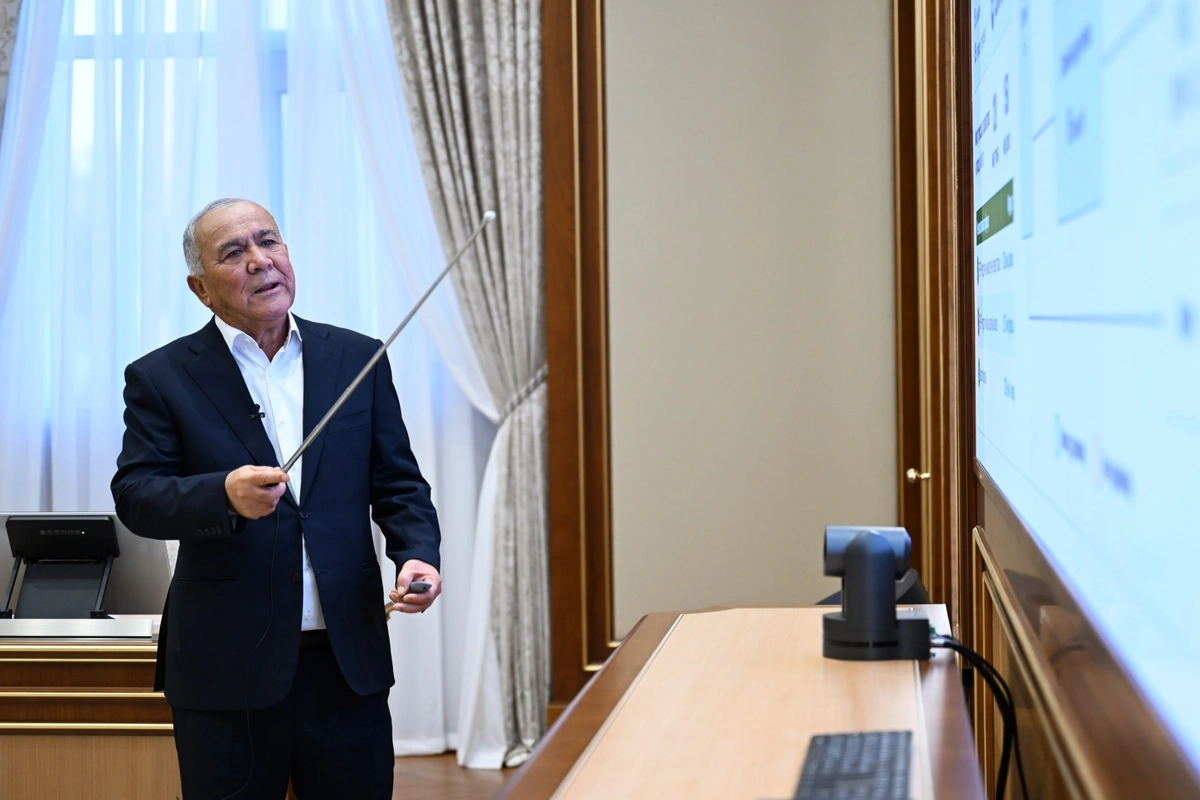
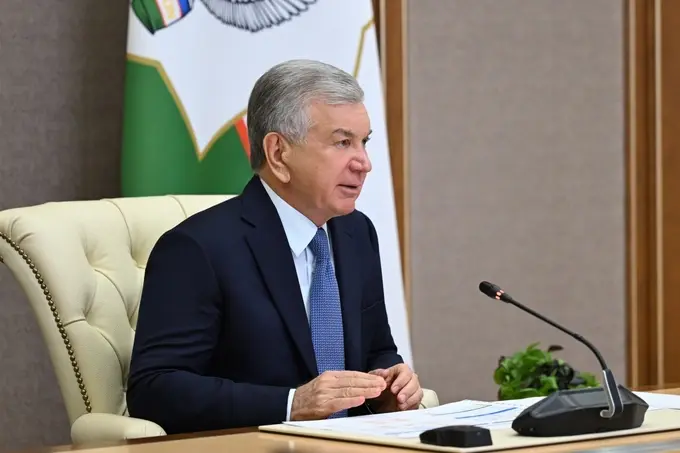
Shavkat Mirziyoyev reviewed a presentation on the operations of the Bukhara Oil Refinery and plans to expand its production capacity, the presidential press service reported.
The refinery currently has the capacity to process up to 2.5 million tonnes of crude oil and gas condensate annually to produce motor petrol, diesel fuel, jet fuel and other petroleum products. It employs more than 3,200 people.
According to a report on its production and financial performance, the refinery processed more than 1.5 million tonnes of raw materials between January and September. Its net profit amounted to 2.2 trillion soums.
By the end of this year, the company plans to process 2.17 million tonnes of raw materials and produce 2.12 million tonnes of petroleum products.
One of the key areas for further development will be modernising the refinery to produce higher-quality fuels. A $328 million project has been developed to establish production of AI-92 and AI-95 petrol meeting the Euro-5 standard.
The project includes upgrading existing technological processes and establishing new production lines. Once completed, it will enable the refinery to produce 1.1 million tonnes of fuel annually.
The project is expected to generate annual savings of up to $150 million by reducing spending on fuel additives. It will also create 200 new jobs.
The project is scheduled to become operational in the second quarter of 2029.

A separate long-term project to further expand the refinery’s production capacity was also presented. It involves an investment of $1.8 billion in new processing facilities and the introduction of modern oil refining and petrochemical technologies.
Upon completion, annual petroleum product output is expected to more than double, from 2.1 million to 4.6 million tonnes. Annual petrol production is projected to reach 2.7 million tonnes, diesel output 1.24 million tonnes and jet fuel production 500,000 tonnes.
The Bukhara refinery will also gain new capabilities for deeper processing of raw materials, producing benzene and other petrochemical products, and manufacturing higher value-added goods.
The refinery will work with technology companies from China, France, the United States and Azerbaijan to implement the project. Construction is scheduled to begin in 2028.
The presentation also focused on the economic efficiency of the projects, attracting advanced technologies and making full use of the refinery’s production capacity. The stated objective is to expand output of high-quality and competitive products.
The English version of this material was generated with the assistance of AI translation tools and may differ slightly from the original text.