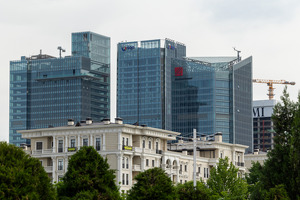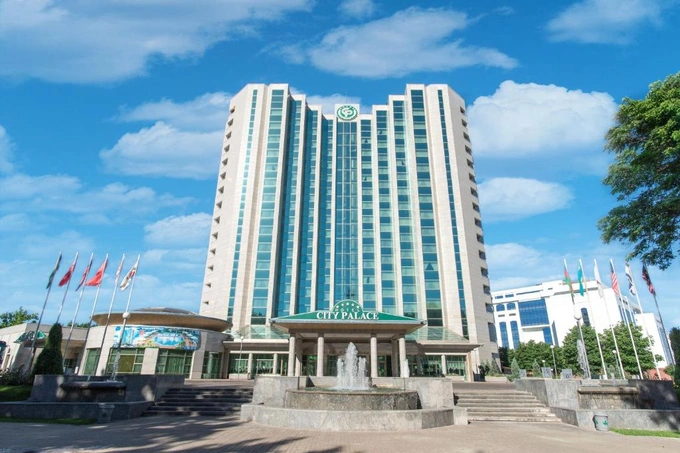
As Spot previously reported, a City Palace representative presented a project for a 41-storey hotel complex on the site of the existing City Palace hotel at a meeting with relevant government agencies. According to the representative, the only remaining approval concerned the building’s height. Authorities said the project did not comply with the city’s master plan and proposed reducing it to 21 storeys, matching the height of the neighbouring InterContinental hotel.
The National Committee for Sustainable Urban Development and the Housing Market said that infrastructure in central Tashkent was not ready to support a 41-storey hotel.
The committee noted that the building proposed by the investor would be almost six times taller than permitted under the master plan, which allows buildings of no more than seven storeys on the site. The number of hotel rooms would increase 4.5 times compared with the current facility, while local infrastructure resources are already insufficient.
“This will inevitably lead to problems with utility and road infrastructure,” the committee said.
Under regulations, electrical substations should operate at no more than 50% of their capacity to maintain a reserve. However, substations in the area are already operating at 70%. The new hotel would increase their load by at least another 10−15%.
The complex would also require twice as much water as the current hotel. The city water network could supply only 65% of this volume, leaving a 35% shortfall.
Navoi and Amir Temur streets are already operating at more than 60% of their capacity during peak hours, exceeding the permitted level. The new complex would add at least another 5−6% to traffic loads.
A 41-storey building would also require separate assessments of its ability to withstand earthquakes and strong winds, as well as plans for fire safety and the evacuation of people.
“Additional pressure on infrastructure whose reserves have already been exhausted will primarily affect the quality of life and working conditions of people in the area,” the committee said.
The committee also outlined the requirements the investor must meet for the project to be considered.
The building’s height must comply with the master plan and be in line with neighbouring buildings.
The project must specify where additional electricity, water, sewage and road capacity will come from, as well as who will build the necessary infrastructure and by what deadline.
The committee stressed that all major projects in the capital undergo the same assessment process: infrastructure capacity is evaluated first, and only then is a decision made on whether construction can proceed.
The English version of this material was generated with the assistance of AI translation tools and may differ slightly from the original text.