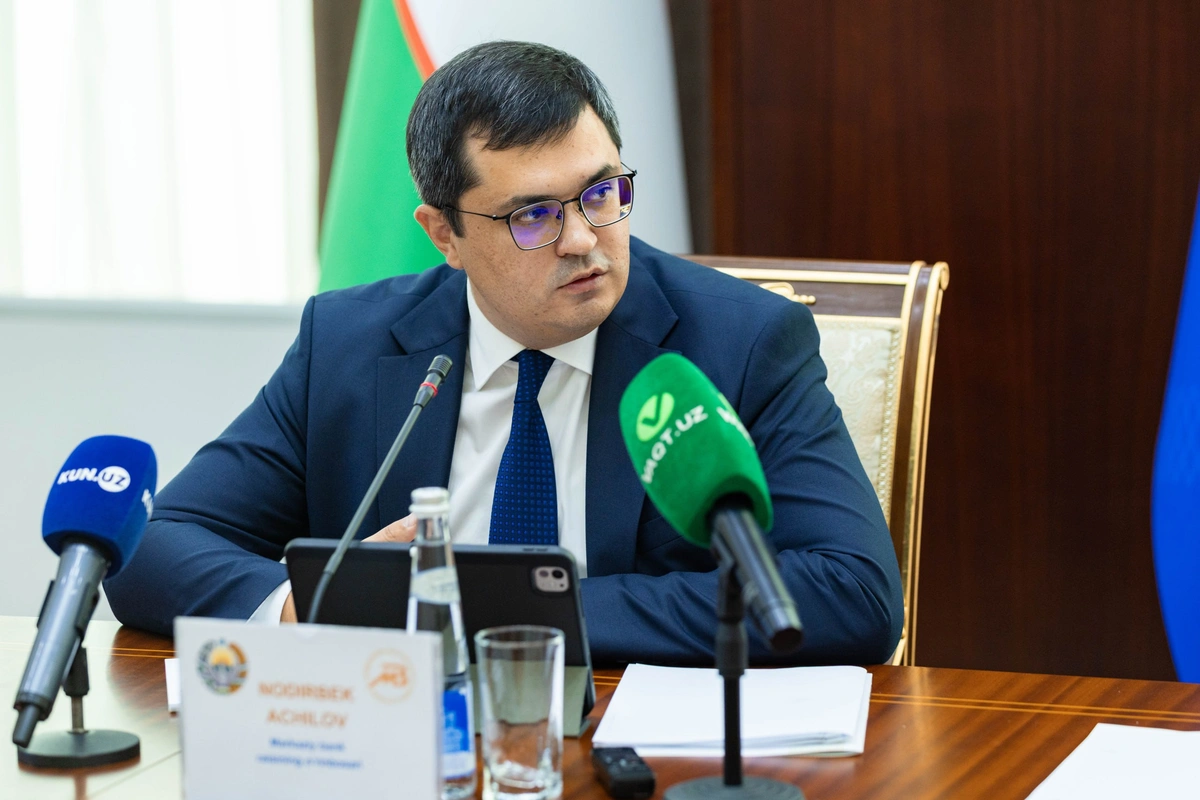
Interest rates on bank loans will gradually decline, Nodirbek Achilov, Deputy Chairman of the Central Bank, said at a press conference on November 4.
In recent years, lending rates have shown a downward trend. For example, average rates in October were 2−3 percentage points lower than in August 2025. However, due to differing trends across lending segments, investment loans are currently cheaper.
The Central Bank has also noted a decline in mortgage rates. According to Achilov, three to four years ago, housing loans were offered at annual rates of 24−25%, whereas some borrowers can now obtain loans at 18%.
Consumer and short-term loans, microloans, unsecured loans and loans offered through online services remain relatively expensive. However, “the pace of interest rate increases in these segments is also slowing”, the Central Bank Deputy Chairman said.
Why loan interest rates remain high
Achilov said several factors were contributing to high lending rates. One of them was the large amount of pent-up demand for borrowing that had accumulated before 2017 and began entering the banking system as the economy was liberalised.
Previously, individuals had limited access to loans, but in recent years banks have focused on meeting growing demand from the population. As a result, interest rates in some lending segments increased.
“The market is now becoming saturated, and demand is also stabilising. This, in turn, gives us reason to expect that over the next three to four years, not only the policy rate but also all deposit and lending rates will decline,” Achilov said.
The Central Bank Deputy Chairman also highlighted the role of banks' funding base in determining loan affordability. He noted that banks obtain funds for lending through domestic sources, including deposits, as well as external channels.
In the previous decade, slow economic growth meant that banks had a relatively small deposit base. However, bank deposits are now growing by as much as 45% annually, providing a source of funding for loans and improving their availability.
According to Achilov, only a small number of banks currently offer deposit rates above 18%, while the average rate at most institutions is around that level. As inflation slows and competition between banks increases, deposit rates are expected to decline further.
How interest rates will come down
The Central Bank is working with the International Monetary Fund and the European Bank for Reconstruction and Development to reduce lending and deposit rates, the regulator’s Deputy Chairman said. One of the main areas of this cooperation is the introduction of floating-rate instruments and the development of the money market.
These measures are expected to affect the cost of long-term funding. Achilov believes Uzbekistan’s lending market will approach equilibrium over the next three to four years.
“As this was a transitional period involving liberalisation, things happened quickly due to several demand-related factors, and the market needed time to absorb these changes. It will reach an equilibrium over the next three to four years,” he said.
The current policy rate of 14% may appear high, the Central Bank Deputy Chairman noted. However, it is intended to address inflation and inflation expectations. Until these indicators decline, there will be no room for further cuts.
Inflation has been on a sustained downward trend over the past two years, Achilov added. Since 2022, core inflation has fallen from 14.5−15% to 5.5%, its lowest level since records began and close to the 5% target. Achilov expects this trend to continue if overall inflation also declines.
At the same time, rates in some lending segments, such as unsecured and fast loans, may remain above average. However, the Central Bank expects increased competition, a wider range of financial products and an expanded funding base to help bring them down.
The English version of this material was generated with the assistance of AI translation tools and may differ slightly from the original text.