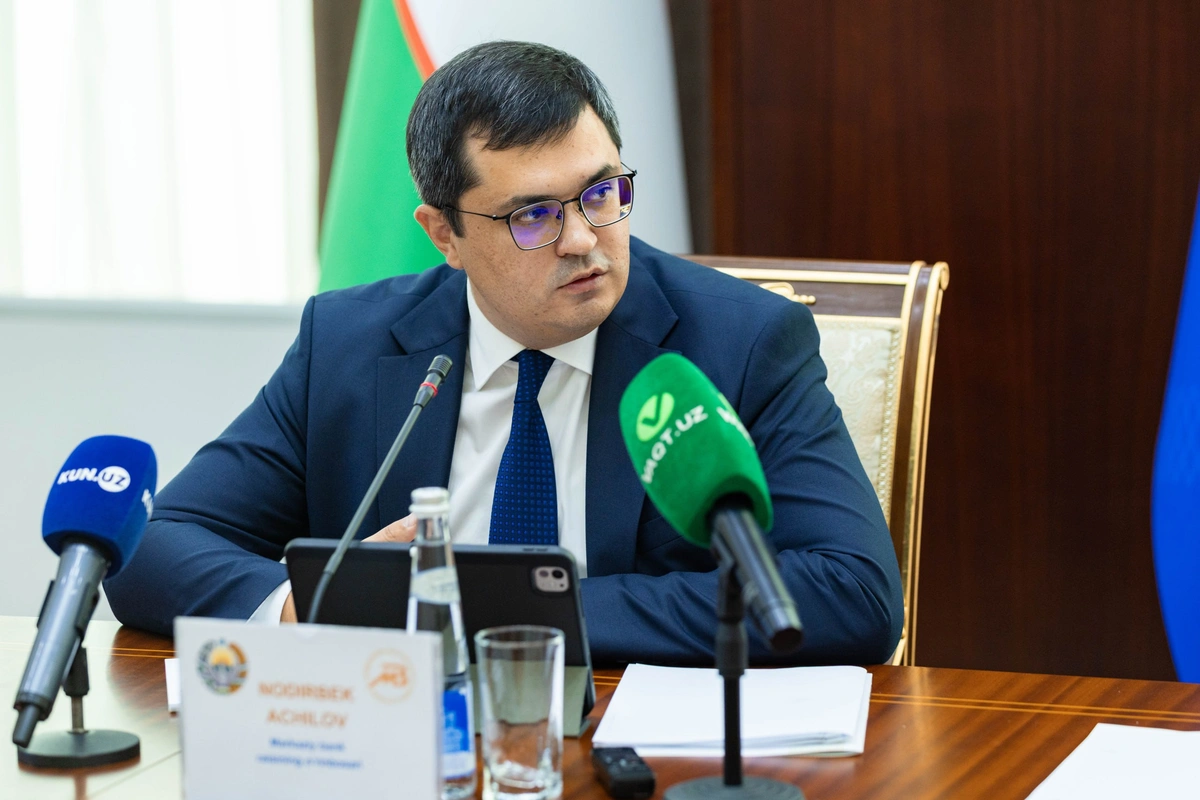
The Central Bank does not expect restrictions on sugar imports to pose significant inflationary risks. This was stated by Deputy Chairman Nodirbek Achilov at a press conference on November 4.
A Spot correspondent asked about the potential impact on food inflation of a 300,000-tonne sugar import quota due to be introduced in 2027. Achilov noted that sugar is one of the components of food inflation.
Since the beginning of this year, sugar prices have remained relatively stable, without significant increases. According to the Central Bank deputy chairman, this has limited their impact on overall inflation.
“We do not see any major risks related to sugar at this point,” Achilov said.
He also noted that the regulator expects food inflation to decline in 2027 compared with its current level. The inflation basket includes 517 types of goods, including sugar.
Under a confidential Cabinet of Ministers resolution dated July 30 (No. 417), Uzbekistan will introduce an annual sugar import quota of 300,000 tonnes starting in 2027. The quota will be divided equally among manufacturers of beverages, confectionery and other food products, with 100,000 tonnes allocated to each category. Information about the resolution emerged in late October.
The annual quota will be approved by the government in November based on “substantiated proposals” from the Ministry of Economy and Finance, the Competition Committee and the National Statistics Committee. It may be revised every six months, and quotas are expected to be distributed through online auctions.
Experts have criticised the restrictions, warning that they could push up sugar prices and increase production costs. Business advocate Bektosh Khatamov said higher sugar prices could affect the cost of other goods and limit exporters' opportunities.
Economist Otabek Bakirov estimated that the import restrictions could reduce government revenue from customs duties by $65 million. Yuliy Yusupov also highlighted the potential impact of import quotas and benefits for local suppliers on competition.
The Association of Producers of Non-Alcoholic Beverages and Juices of Uzbekistan (UzBev) has also criticised the proposed restrictions. The organisation said that support for domestic sugar producers should not create additional barriers for other food manufacturers.
UzBev also warned that the government’s decision could face challenges in light of Uzbekistan’s commitments under its accession process to the World Trade Organisation (WTO). According to the association, the resolution violates the ban on quantitative import restrictions and risks breaching the principle of national treatment.
The English version of this material was generated with the assistance of AI translation tools and may differ slightly from the original text.