Legacy problem loans remain one of the main challenges facing Uzbekistan’s state-owned banks, although efforts to clean up their balance sheets and reduce the share of foreign-currency loans are continuing. Fitch Ratings banking sector director Pavel Kaptel said this at an event held in Tashkent on October 27.
Policy banks have written off large amounts of impaired loans, mainly from subsidised lending portfolios and the small and medium-sized enterprise (SME) segment. Meanwhile, Uzbek Industrial and Construction Bank (SQB) and Asakabank have tightened their loan classification policies, resulting in higher reported impairment levels in 2025. Further transfers of problem loans and write-offs are expected to improve their asset quality over the medium term.
Kaptel also noted a significant decline in dollarisation across the banking sector. Foreign-currency loans accounted for 39% of total sector lending at the end of the first half of 2026, while foreign-currency deposits made up 19%. Both figures were record lows.
However, foreign-currency lending remains a significant source of credit risk because borrowers lack adequate tools to hedge against exchange-rate fluctuations. Risks are particularly high in the SME segment.
At the same time, strong deposit growth is improving banks' funding profiles. Deposits increased by 27% year on year in the first half of 2026, reducing the sector’s loans-to-deposits ratio to 136%, compared with 209% at the end of 2021.
Despite this improvement, state-owned banks remain heavily reliant on government funding and external borrowing, Fitch noted.
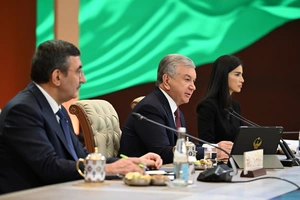
Central Bank Chairman Timur Ishmetov said at a meeting on November 13 that the president had placed particular emphasis on reducing dollarisation and strengthening confidence in the soum.
“By strengthening confidence in the soum, we raised the issue of increasing borrowing and lending in the national currency across the economy, as well as shifting household deposits and loans predominantly into soums,” Ishmetov said.
He noted that reducing risks associated with foreign-currency transactions and borrowing was one of the key priorities for ensuring economic stability.
The English version of this material was generated with the assistance of AI translation tools and may differ slightly from the original text.