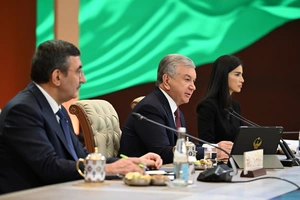
The privatisation of Uzbekistan’s state-owned banks could be postponed until 2028, although the first sale may take place in 2027. Fitch Ratings banking sector director Pavel Kaptel said this at the agency’s Fitch on Uzbekistan conference in Tashkent on October 27.
Banking sector reforms have accelerated over the past two years, improving the sector’s medium-term prospects, Fitch said. However, the privatisation of large state-owned banks may take longer than initially planned. Legacy asset-quality problems and the limited seasoning of retail lending portfolios remain key risks.
Under the Uzbekistan-2030 strategy, five banks are to be sold by the end of 2030, with the process scheduled to begin in 2027. Preparations have recently intensified, with the focus on Uzbek Industrial and Construction Bank (SQB) and Asakabank.
Kaptel said the involvement of Franklin Templeton and the European Bank for Reconstruction and Development (EBRD) would support the banks' business transformation and improve their prospects for sale in the medium term. However, further preparation is needed, and the privatisation process could be deferred until 2028.
Pre-sale measures include transferring problem assets to state agencies and providing additional government capital to address legacy risks.
In September 2025, the president approved the transfer of a 30% stake in Uzsanoatqurilishbank to the Uzbekistan National Investment Fund. Meanwhile, the fund’s stakes in Microcreditbank (40%) and Business Development Bank (25%) were removed from its portfolio.
In December, it was announced that the EBRD would acquire a 15% stake in Asakabank as part of preparations for its privatisation. The EBRD is expected to join the state-owned bank’s shareholder structure in 2026. Fitch subsequently suggested that the privatisation of Aloqabank could be cancelled.
Under the strategy, the number of state-owned banks is to be reduced to seven in 2027, six in 2028, five in 2029 and four in 2030. This would mean privatising five state-owned banks, while four others, which have not been named, would remain under state ownership.
Central Bank Chairman Timur Ishmetov recently said the president had instructed officials to accelerate the transformation of state-owned banks and the privatisation of some of them. The aim is to develop a banking system suited to the economy’s next stage of development.
The English version of this material was generated with the assistance of AI translation tools and may differ slightly from the original text.